
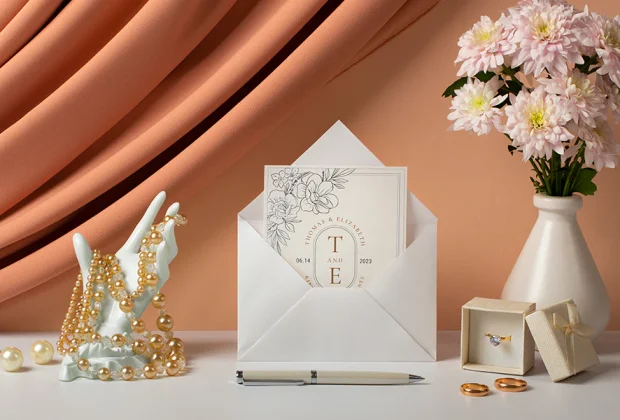
Your wedding invitation is the first physical piece of your wedding that guests will hold in their hands. Before the venue, the dress, or the flowers, the invitation is what tells them what kind of day you're planning. It sets the tone, signals the formality, and gives the people you love their first real glimpse into your celebration.
Custom invitations have become the standard for couples who want something that feels personal rather than picked from a catalog. The challenge is that the design world is full of options, and it's easy to feel overwhelmed before you even start. Here's a practical guide to ordering custom wedding invitations that match your day and arrive without stress.
Start With the Tone of Your Wedding
Before looking at any designs, decide what kind of wedding you're hosting. A black-tie evening at a historic venue calls for something different than a backyard celebration in late summer. The invitation should preview the experience your guests are walking into, not contradict it.
Formal weddings tend to call for traditional fonts, classic layouts, heavier paper stock, and details like letterpress, foil stamping, or engraving. More relaxed weddings can lean into hand-drawn illustrations, watercolor accents, modern typography, or playful color palettes. Outdoor and destination weddings often work beautifully with botanical motifs, location-inspired artwork, or custom maps. The right design isn't the trendiest one. It's the one that matches the day you're actually planning.
Plan Your Timeline Backward
Custom invitations take longer than most couples expect. A typical timeline runs eight to twelve weeks from initial concept to mailed envelopes, sometimes longer with custom illustrations or specialty printing.
Working backward from your wedding date, invitations should be in guests' hands six to eight weeks before the wedding for a local event, and ten to twelve weeks before for a destination wedding. That means starting the design process at least four to six months before the wedding. If you're sending save-the-dates first, those go out six to eight months ahead, which means concepting them about eight to ten months out. The couples who feel the most stress about invitations are almost always the ones who started too late.
Decide What to Include
A complete invitation suite usually includes more than just the main invitation. The standard set has five pieces: the main invitation, an RSVP card with a return envelope, a details card with information about lodging or transportation, a reception card if the reception is at a different location, and an outer envelope.
Beyond the basics, couples often add custom touches that elevate the suite into something memorable. Wax seals, ribbon ties, vellum overlays, hand-calligraphed envelopes, custom monograms, and belly bands all add character. None are required, but each one adds a layer of intention that guests notice.
Choose Paper That Matches the Design
Paper matters more than most people realize. The weight, texture, and finish change how the invitation feels in the hand and how the printing reads on the page. Heavier card stock signals formality and lasts longer. Cotton paper has a soft, luxurious texture that pairs beautifully with letterpress. Smooth matte stocks work well with modern flat printing. Handmade paper adds an organic, artisanal feel.
If you're choosing a specialty printing technique like letterpress, foil, or engraving, the paper choice becomes even more important because the impression and ink interact differently with each surface. Ask for paper samples before committing.
Proofread Three Times, Then Once More
The single most common regret with custom invitations is a typo that slipped through. Names spelled wrong. Wrong dates. Incorrect venue addresses. Once an invitation is printed in quantity, fixing it means starting over.
Read the proof out loud. Have at least three other people read it. Check the date against a calendar and confirm the day of the week. Verify every name, including the spelling of both sets of parents. Confirm the venue address against a map. It feels excessive until the alternative is reprinting two hundred invitations.
Budget With Room for the Extras
Couples often budget for the printed pieces and forget the supporting costs. Postage for square or oversized invitations costs more than standard. Calligraphy services add up quickly when applied to every envelope. Wax seals, ribbon, and assembly labor are billed separately by most stationers. A reasonable rule of thumb is to plan for total invitation costs to be roughly double the price of the printing alone once everything is included.
A well-designed invitation is more than paperwork. It's the first artifact of a marriage, the piece guests keep on the fridge for months, and the keepsake that often ends up tucked into a memory book years later. Take the time to make it feel like you.